

Your Professional Die Castings Manufacturer!
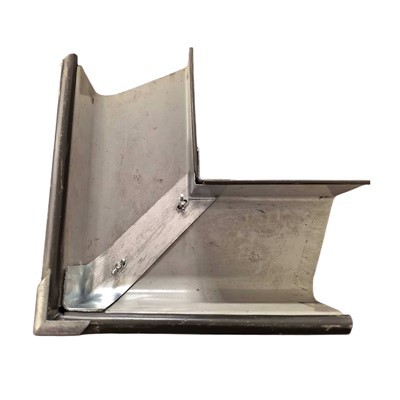
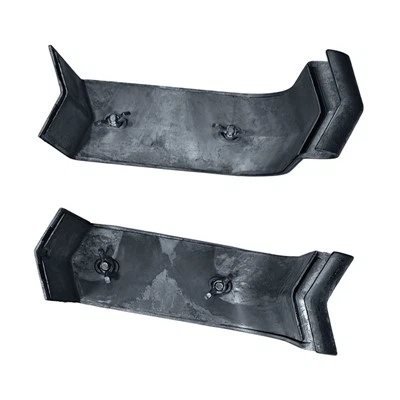
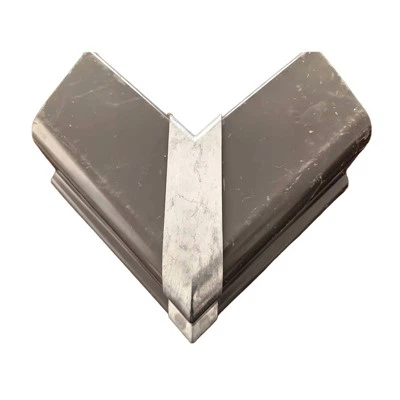
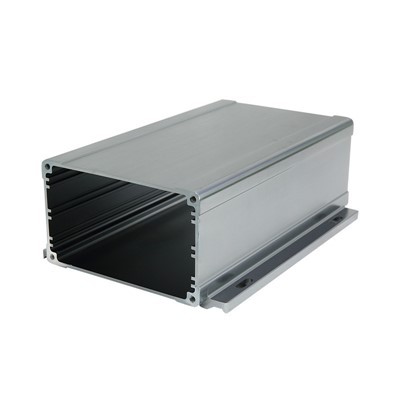
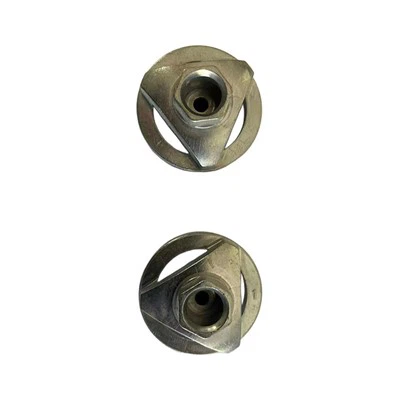
The company, formerly Yuyao Jinniu Stamping Parts Factory, has been deeply rooted in the mold industry for many years, specializing in the professional design and precision manufacturing of core products such as stamping molds, deep drawing molds, and progressive dies.Our Product: Architectural hardware fittings, automotive hardware fittings, small appliance hardware fittings, micro-motor hardware fittings, furniture hardware fittings, shelving hardware fittings.


Why Choose Us
Rich Experience
Our core team is led by senior engineers with over ten years of experience in the industry, supported by professional equipment such as high-precision CNC machining centers and fully automated stamping production lines.
Wide Application Of Technology
We precisely match customer drawings or sample requirements, providing customized hardware solutions from design optimization to mass production.
standardized production
EOur products are exported to core markets in Europe and Eastern Europe, including Australia, Russia, and Germany, earning high recognition from international customers for our stable quality and efficient delivery capabilities.
Die casting is a high-precision manufacturing process in which molten metal is injected under high pressure into a hardened steel mold (called a die) to produce complex metal parts with excellent dimensional accuracy and surface finish.

Product Specification
We offers the following product specifications:
|
Material |
Aluminum / zinc alloy |
|
Manufacturing Process |
500-ton die casting, high-pressure forming |
|
Standard MOQ |
5000 pieces |
|
Sampling Lead Time |
15-40 days |
|
Quality Testing |
Hammer test, salt water immersion (30 days) |
|
Surface Options |
Natural metal, powder coating, plating (1-year warranty) |
|
Packaging |
Carton + plywood pallet + stretch film for sea freight |
|
Shipping Terms |
EXW (standard), FOB Ningpo (available) |
|
After-Sales Support |
Sales follow-up + technician analysis until issue resolved |
|
Company Experience |
20 years in metal fabrication (formerly stamping mold specialist) |
Material Compatibility
Magnesium
Magnesium alloy die casting is one example as it can make strong and lightweight parts, as well as some of the thinnest sections possible thanks to the melt's low viscosity.
Zinc
Zinc is used where strength isn't a priority as it's a more affordable material and easy to work with. It's also strong enough to make parts like enclosures and toys.
Copper
Copper isn't used much in die casting because the high temperature could induce more thermal shock and it could crack. If you're set on die-casting copper, you have to handle it very carefully and use a high-pressure process.
Pewter
Pewter is a soft alloy that combines other materials. It's mainly tin, but also has traces of copper and bismuth. It's used for decorative objects and is easy to die cast in low-pressure equipment.
Aluminum
Aluminum provides highly precise parts that range from moderately strong to very strong.
Application
Aerospace
The aerospace industry uses metal casting to manufacture aircraft engine components like housings and brackets using aluminum alloys (e.g., ADC12, A380) and magnesium alloys (e.g., AZ91D).
Automotive
The automotive industry uses the manufacturing process to make engine components like cylinder heads, transmission housings, blocks, and body parts such as wheel rims and door handles. Examples of automotive die casting materials used in the industry include aluminum alloys (e.g., ADC12, A380), zinc alloys (e.g., ZAMAK), and magnesium alloys (e.g., AZ91D).
Electronics
It is applicable in making electronics components such as connectors, heat sinks, and housings using aluminum alloys (e.g., ADC12, A380), zinc alloys (e.g., ZAMAK), and magnesium alloys (e.g., AZ91D). The manufacturing process can precisely make parts with complex details which are common to the electronics industry.
Consumer Products
Consumer products such as kitchen appliances, power tools, and other hardware are made using die casting process using aluminum, zinc, and tin alloy. Die casting offers high productivity, mass production, and cost-effectiveness, which are important in manufacturing these products.
Construction
The construction industry makes use of the die casting process in making hardware like hinges, window frames, and fixtures. The manufacturing process can produce parts with complex shapes hence it is important when functions and aesthetic appeal are important.

Design and Engineering
Design and Engineering
Advanced Design Engineering. Advanced software tools such as EdgeCAM and AutoCAD allow us to work with complex prototypes, new or existing product redesigns. or reverse engineering methods to produce the desired product.
Comprehensive Tooling Approach. Our expertise helps us offer optimal material and tool matching, run sizing, and specification assessments to ensure designs meet all cost constraints and address project-specific needs.
Prototyping Services. AIC provides prototyping services for our stamped metal components, including refinement and testing of the design before production begins.
Metal Stamping Techniques
Bending
Blanking
Coining
Forming
Piercing
Progressive Die Stamping
Shallow Draw Stamping
Secondary Operations
De-Burring
Drilling
Grinding
Heat Treating
Machining
Painting
Plating
Riveting
Tapping
Welding
Volume Flexibility
Our Company can handle orders of any size, from short runs to large-scale manufacturing.
Package & Delivery
1. Package: Standard export package or Custom
2. Delivery: By air express, by sea

fAQ
We are one of the most experienced die castings manufacturers and suppliers in China. With a professional production team, we are able to meet the needs of the majority of our customers. Please rest assured to buy customized die castings made in China here from our factory. Also, OEM service is available.
