

Your Professional Deep Drawn Parts Manufacturer!
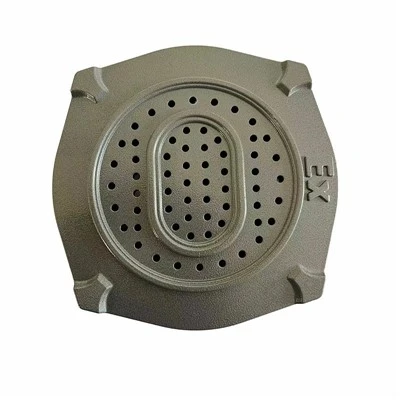
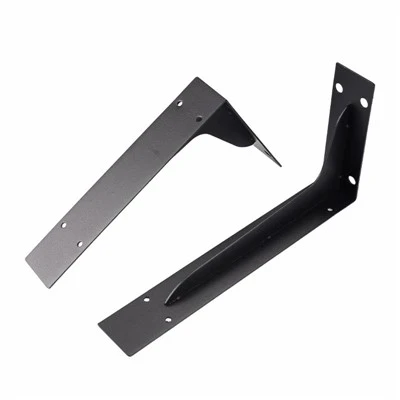
The company, formerly Yuyao Jinniu Stamping Parts Factory, has been deeply rooted in the mold industry for many years, specializing in the professional design and precision manufacturing of core products such as stamping molds, deep drawing molds, and progressive dies.Our Product: Architectural hardware fittings, automotive hardware fittings, small appliance hardware fittings, micro-motor hardware fittings, furniture hardware fittings, shelving hardware fittings.


Why Choose Us
Rich Experience
Our core team is led by senior engineers with over ten years of experience in the industry, supported by professional equipment such as high-precision CNC machining centers and fully automated stamping production lines.
Wide Application Of Technology
We precisely match customer drawings or sample requirements, providing customized hardware solutions from design optimization to mass production.
standardized production
EOur products are exported to core markets in Europe and Eastern Europe, including Australia, Russia, and Germany, earning high recognition from international customers for our stable quality and efficient delivery capabilities.

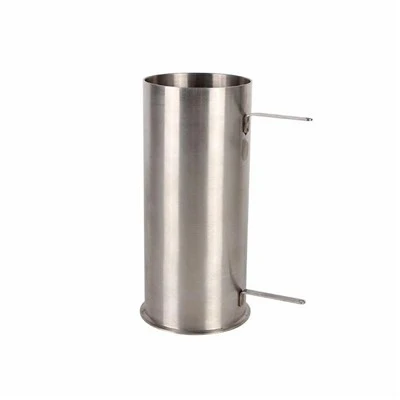
Deep drawn parts are seamless, 3D metal components manufactured by punching a flat sheet metal blank into a series of forming dies. Generally, a part is classified as "deep drawn" if its depth exceeds its width or diameter.
Product Specification
We offers the following product specifications:
|
Parameter |
Details |
|
Materials |
Steel ST14/ST16, Copper, Aluminum, Stainless 304 |
|
Thickness |
0.3–3.0 mm |
|
Tolerances |
±0.1 mm (critical dimensions) |
|
Press Capacity |
16–500 tons (presses and hydraulic) |
|
Strength Increase |
Approx. 15% – 25% after forming |
|
Production Case |
500,000 pcs for Russian client, 99.5% pass rate |
|
MOQ |
5,000 pieces |
|
Sampling Time |
15–30 days |
|
Mass Production Time |
Approx. 20 days |
|
Surface Finishes |
Galvanized, Powder-coated, Brushed, Polished |
|
Equipment |
45 machines (15 presses, 4 hydraulic, 3 benders, 2 laser cutters) |
|
Factory Area |
10,000 m² workshop |
|
Quality Control |
First-article check, full traceability, dimension reports |
|
Packaging |
Cartons + wooden pallets, sea-worthy |
Product advantages
Cost-Efficiency
Deep draw manufacturing minimizes material waste and allows for high-volume production runs, making it cost-effective for large orders.
Durability and Strength
Deep-drawn parts are known for their enhanced structural integrity and durability, making them ideal for demanding applications.
Versatility in Design
The process allows for the creation of complex, intricate shapes that are difficult to achieve with other metal-forming methods.
Precision
Deep drawn components are highly precise, meeting tight tolerances, which is essential in industries like automotive and aerospace.
Application
Automotive Industry
Fuel Delivery Systems: Deep-drawn parts are integral in producing fuel tanks, delivering durability and leak-proof designs.
Transmission Components: Housings and cases for transmissions use deep-drawn parts due to their strength and dimensional accuracy.
Electronics and Technology
Smartphone Casings: Deep-drawn metal parts offer strength and lightweight properties, which are ideal for phone casings.
Connectors and Housings: Components in electronics rely on deep-drawn parts for precision and structural stability.
Aerospace Sector
Aircraft Structural Components: Various parts like airframe sections, fuselage panels, and fuel tanks benefit from deep-drawn elements, ensuring strength without excess weight.
Medical Equipment
Implantable Devices: Medical implants use deep-drawn parts due to their biocompatibility and precision in complex designs.
Diagnostic Equipment: Housings and enclosures for medical devices often employ deep-drawn parts for their robustness and intricate shapes.
Consumer Goods
Cookware: Pans and pots utilize deep-drawn metal for uniform heating and durability.
Packaging: Beverage cans and cosmetic containers benefit from deep-drawn parts for their sleek designs and strength.
Deep Drawing Manufacturing Process
The deep drawing process demands high precision, advanced tooling, and specialized machinery. Below is a simplified outline of the steps involved:
Blank Preparation
A sheet of metal (such as stainless steel, aluminum, brass, or copper) is cut into a flat blank.
Drawing
The blank is positioned over a die and pushed by a punch to create the initial cup shape.
Redrawing
If the component necessitates additional depth or a complex design, multiple redraw operations are conducted.
Trimming & Piercing
Excess material is removed, and holes or slots are incorporated as needed.
Material Compatibility
Aluminum Stamping
Aluminum is among the more common metals for metal stamping. Known for excellent corrosion resistance, durability, malleability, and ductility, aluminum is a low-cost, sustainable metal for deep drawn parts.
Stainless Steel Stamping
As one of the most desirable construction materials, stainless steel is excellent for deep drawn metal parts. In addition to increased corrosion resistance, reliable resistance to extreme temperatures, and superior strength, stainless steel presents an aesthetically pleasing finish.
Cold-Rolled Steel
Cold-rolled steel is formed through unique manufacturing processes, which give it distinct and versatile characteristics compared to hot-rolled steel. Cold-rolled steel undergoes additional processing, including extensive shaping, to increase its strength, hardness, and durability.
Copper Stamping
Copper is known for its superior resistance to corrosion and water. Its formability, ductility, and malleability make it a highly versatile metal material. Copper has well-documented antimicrobial properties, making it highly beneficial in the food and beverage and medical industries.
Brass Stamping
Desired for increased resistance to water and corrosion, brass presents an attractive finish, making it ideal for applications demanding aesthetics. Brass is an alloy of zinc and copper, with differing properties based on the ratio of its components.
Nickel Silver Alloy
Made from a blend of nickel, copper, and zinc, nickel silver alloys feature excellent resistance to electrical stimulation while maintaining conductivity and corrosion resistance. They are highly malleable and machinable, expanding their versatility for various uses.

Common Problem
Design and Engineering
Advanced Design Engineering. Advanced software tools such as EdgeCAM and AutoCAD allow us to work with complex prototypes, new or existing product redesigns. or reverse engineering methods to produce the desired product.
Comprehensive Tooling Approach. Our expertise helps us offer optimal material and tool matching, run sizing, and specification assessments to ensure designs meet all cost constraints and address project-specific needs.
Prototyping Services. AIC provides prototyping services for our stamped metal components, including refinement and testing of the design before production begins.
Metal Stamping Techniques
Bending
Blanking
Coining
Forming
Piercing
Progressive Die Stamping
Shallow Draw Stamping
Secondary Operations
De-Burring
Drilling
Grinding
Heat Treating
Machining
Painting
Plating
Riveting
Tapping
Welding
Volume Flexibility
Our Company can handle orders of any size, from short runs to large-scale manufacturing.
Package & Delivery
1. Package: Standard export package or Custom
2. Delivery: By air express, by sea

fAQ
We are one of the most experienced deep drawn parts manufacturers and suppliers in China. With a professional production team, we are able to meet the needs of the majority of our customers. Please rest assured to buy customized deep drawn parts made in China here from our factory. Also, OEM service is available.
Drawn Ice Cup, Butter Pail Lid, Thin Copper Parts