

Your Professional Zinc Die Castings Manufacturer!
The company, formerly Yuyao Jinniu Stamping Parts Factory, has been deeply rooted in the mold industry for many years, specializing in the professional design and precision manufacturing of core products such as stamping molds, deep drawing molds, and progressive dies.Our Product: Architectural hardware fittings, automotive hardware fittings, small appliance hardware fittings, micro-motor hardware fittings, furniture hardware fittings, shelving hardware fittings.

Why Choose Us
Rich Experience
Our core team is led by senior engineers with over ten years of experience in the industry, supported by professional equipment such as high-precision CNC machining centers and fully automated stamping production lines.
Wide Application Of Technology
We precisely match customer drawings or sample requirements, providing customized hardware solutions from design optimization to mass production.
standardized production
EOur products are exported to core markets in Europe and Eastern Europe, including Australia, Russia, and Germany, earning high recognition from international customers for our stable quality and efficient delivery capabilities.
Zinc die casting is a manufacturing process where molten zinc alloy is injected into a reusable steel mold under high pressure. It is celebrated for its ability to produce highly complex, precise, and strong metal components at rapid production speeds.

Product Specification
We offers the following product specifications:
|
Parameter |
Details |
|
Product Name |
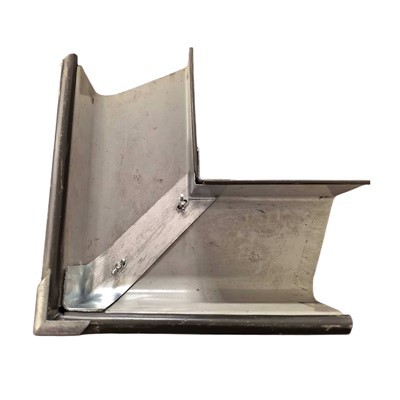
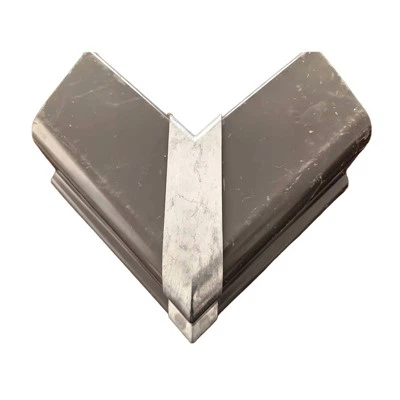
45-degree bend in the gutter |
|
Material |
Zamak3 zinc alloy (other materials on request) |
|
Manufacturing Process |
300-ton die casting, one-shot forming |
|
Key Design Features |
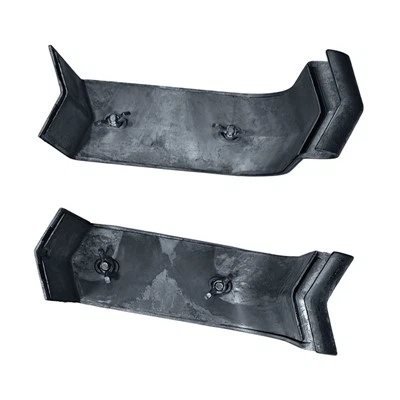
Sloped structure, bolt fixing, smooth water flow |
|
Standard MOQ |
5000 pieces |
|
Sampling Lead Time |
15-40 days (based on drawing/sample) |
|
Quality Control |
In-house testing with high-pressure water gun, batch sampling |
|
Packaging |
Carton with dividers + plywood pallet, wrapped for sea freight |
|
Company Experience |
20 years in metal fabrication (formerly stamping mold specialist) |
|
Main Market |
Australia (long-term cooperation with APEX) |
Product advantages
Easy Assembly
Like any other die casting process, the entire part is cast as a single unit. Therefore, assembling reduces.
High Precision With Thin Wall
Zinc alloys are strong compared to other alloys compatible with die casting. A design optimization that calls for a reduction in the wall thickness can be put into place. Compared to materials such as aluminum, zinc can still exude structural integrity in such a case.
Better Mechanical Properties
Zinc alloys have an advantage over aluminum and magnesium based on mechanical properties such as strength and durability. This further improves their use in parts that require materials with high strength. Other mechanical properties include corrosion resistance, firmness, and toughness.
Cast Complex Geometries
Zinc's excellent bearing and wear properties make it suitable to act as bushings for structures in motion. It is suitable for making parts with complex geometries due to its ability to form joints with other materials.
Longer Tool Life
Mold used in zinc die casting can last about ten times the aluminum die casting mold due to the zinc alloy's less abrasive and lower melting point. As a result, there is a reduction in mold damage and an extension in the tool's longevity.
Faster Production
Zinc alloys have a low melting point and require a hot chamber die casting process that occurs at high-pressure injection. This will increase the cycle rate more than other materials, such as aluminum (zinc alloy die casting has a cycle rate that is 150-200% higher than aluminum).
Application
Automotive Industry
Zinc castings are applicable in making several automotive industry interior components. The material has a higher preference than aluminum due to its strength. Examples of automotive zinc alloy casting include bearings, steering, and brake parts.
Electronics
Zinc alloy casting is also applicable in making components employed in manufacturing electronic parts such as energy regulators, toggle switches, wall clocks, and ceramic-encased resistors. Here, dimensional stability comes into play.
Home appliances
Zinc casting is suitable for making home appliances such as belts, furniture inserts, key chains, shoe buckles, door locks, and handles. Here, its strength and dimensional stability improve its use in home appliances.
Mechanical sector
Zinc alloy casting is also applicable in making parts of engines used in the mechanical sector. Here, properties such as creep resistance and hardness come into play. The material is more suitable than materials such as aluminum.
Material Compatibility
Zamak 3: Widely employed for its balanced mechanical properties and dimensional stability, popular in automotive, electronics, and consumer goods.
Zamak 5: Contains higher copper, enhancing hardness and strength, suitable for high-stress automotive components and industrial hardware.
Zamak 7: Provides higher purity, minimizing impurities, ideal for applications demanding premium finishes and improved corrosion resistance, common in consumer electronics components.
Different kinds of finishes like gold, weathered bronze, steel and leather can be done on zinc die casts. Zinc has a high density; hence fixtures made of zinc die casts are much more durable when compared to their plastic counterparts.
The Core Process
Die Preparation:
Each production cycle begins with the thorough cleaning and lubrication of the steel mold, ensuring optimal condition and easy removal of finished parts.
Melting and Injection:
Zinc alloys, typically heated above 400°C (752°F), are injected into the mold cavity under high pressure. This guarantees that even the smallest cavities and intricate shapes are filled completely, resulting in detailed parts with minimal defects.
Cooling and Ejection:
Molten zinc solidifies rapidly within the mold. Upon cooling, the die opens and the completed part is ejected.
Trimming and Finishing:
Excess material (“flash”) around the edges is trimmed, followed by optional post-processing: polishing, machining, coating, or plating. These finishing steps enhance aesthetic and functional qualities, such as corrosion resistance or wear tolerance.

Services & Capabilities
Design and Engineering
Advanced Design Engineering. Advanced software tools such as EdgeCAM and AutoCAD allow us to work with complex prototypes, new or existing product redesigns. or reverse engineering methods to produce the desired product.
Comprehensive Tooling Approach. Our expertise helps us offer optimal material and tool matching, run sizing, and specification assessments to ensure designs meet all cost constraints and address project-specific needs.
Prototyping Services. AIC provides prototyping services for our stamped metal components, including refinement and testing of the design before production begins.
Metal Stamping Techniques
Bending
Blanking
Coining
Forming
Piercing
Progressive Die Stamping
Shallow Draw Stamping
Secondary Operations
De-Burring
Drilling
Grinding
Heat Treating
Machining
Painting
Plating
Riveting
Tapping
Welding
Volume Flexibility
Our Company can handle orders of any size, from short runs to large-scale manufacturing.
Package & Delivery
1. Package: Standard export package or Custom
2. Delivery: By air express, by sea

fAQ
We are one of the most experienced zinc die castings manufacturers and suppliers in China. With a professional production team, we are able to meet the needs of the majority of our customers. Please rest assured to buy customized zinc die castings made in China here from our factory. Also, OEM service is available.
Gutter 90 Elbow, Eavestrough Elbows, 45 degree Bend in The Gutter