

Your Professional Aluminum Die Castings Manufacturer!
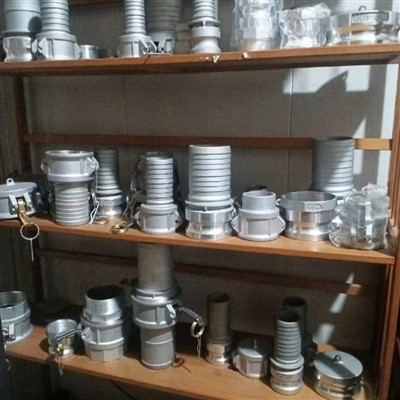
The company, formerly Yuyao Jinniu Stamping Parts Factory, has been deeply rooted in the mold industry for many years, specializing in the professional design and precision manufacturing of core products such as stamping molds, deep drawing molds, and progressive dies.Our Product: Architectural hardware fittings, automotive hardware fittings, small appliance hardware fittings, micro-motor hardware fittings, furniture hardware fittings, shelving hardware fittings.

Why Choose Us
Rich Experience
Our core team is led by senior engineers with over ten years of experience in the industry, supported by professional equipment such as high-precision CNC machining centers and fully automated stamping production lines.
Wide Application Of Technology
We precisely match customer drawings or sample requirements, providing customized hardware solutions from design optimization to mass production.
standardized production
EOur products are exported to core markets in Europe and Eastern Europe, including Australia, Russia, and Germany, earning high recognition from international customers for our stable quality and efficient delivery capabilities.

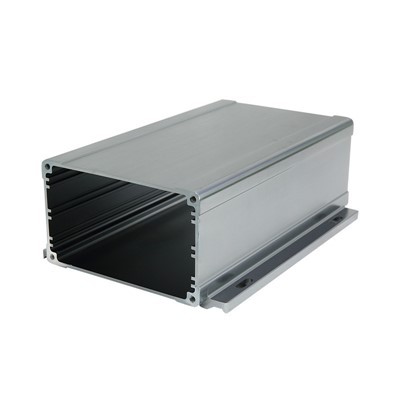
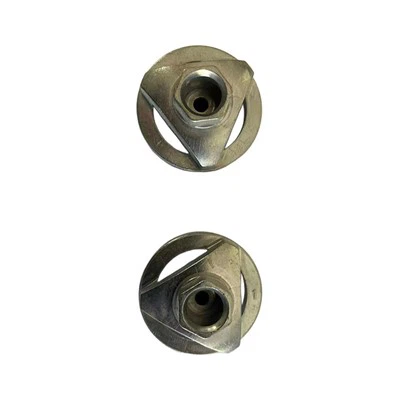
Aluminum die casting is a manufacturing process where molten aluminum is injected into a hardened steel mold (die) under extremely high pressure. It allows mass production of precise, lightweight, and complex metal parts with excellent strength-to-weight ratios and superior heat dissipation.
Product Specification
We offers the following product specifications:
|
Parameter |
Details |
|
Product Name |
Bubble Jet Housing |
|
Material |
ADC12 aluminum alloy |
|
Manufacturing Process |
200-ton die casting + secondary thread machining |
|
Key Design Features |
Ergonomic grip curve, anti-slip texture, quick-connect interface, smooth trigger guard |
|
Weight |
~1.5 kg (50% lighter than brass) |
|
Standard MOQ |
5000 pieces (mixed models allowed) |
|
Sampling Lead Time |
15-40 days |
|
Monthly Capacity |
~10 million pieces |
|
Factory Machines |
45 total |
|
Surface Treatment |
Hard anodizing (custom colors available, e.g., fire red) |
|
Quality Testing |
High-pressure leak test, thread fit test |
|
After-Sales Support |
Technician analysis and feedback until issue resolved |
|
Company Experience |
20 years in metal fabrication (formerly stamping mold specialist) |
|
Main Client |
Australian fire equipment company |
Product advantages
Heat Tolerance – Die cast parts can match the complexity found in plastics while operating effectively in high heat environments.
Strength and weight – Pressure cast aluminum parts provide greater strength than plastic injection molding for the same dimensions. Incorporating features rather than attaching them in separate operations reduces assembly time, increases quality and improves strength.
Multiple finishing techniques – We produce aluminum die cast parts with smooth or textured surfaces which can easily be plated, coated or finished with a minimum of surface preparation.
Simplified Assembly – Aluminum die castings provide integral fastening elements, such as bosses and studs. Precise corings simplify tapping. Integration of threads in the mold design phase eliminates additional fasteners for assembly processes.
Alloy Selection – Selecting the correct aluminum alloy for the application and designing the component to exploit the characteristics of the alloy and the die cast process allows OEMs to reap the full benefits of aluminum in many applications.
Corrosion Resistance – In applications demanding a high tolerance to corrosive environments, aluminum offers distinct advantages over alternative materials. When combined with the correct coating technology for the application – aluminum parts provide the best combined durability against salt, water and UV damage.
Materials
|
Aluminum Alloy |
Primary Characteristic |
Ideal Application |
|
A380 |
Offers the best combination of casting ease and mechanical properties. |
Structural brackets, heavy-duty chassis components, and general-purpose parts. |
|
A383 |
Provides superior resistance to hot cracking during the cooling phase. |
Components with intricate details or highly complex geometries. |
|
A360 |
Delivers excellent pressure tightness and maximum protection against rust. |
Fluid-handling systems and enclosures exposed to harsh outdoor environments. |
Industries and Applications
Automobilistico— Engine components, transmission housings, brake parts, and EV battery enclosures. The push for lighter vehicles to meet emissions standards has made aluminum indispensable in modern vehicle design. Replacing traditional iron and steel components with high-quality aluminum directly improves fuel efficiency and reduces vehicle emissions.
Aerospaziale— Structural brackets, airframe components, and equipment housings where strength-to-weight ratios are critical. Aerospace casting market data highlights continued growth as aircraft manufacturers seek lighter, more fuel-efficient designs.
Electronics— Heat sinks, connectors, and enclosures benefit from aluminum's thermal conductivity and electromagnetic shielding properties, even in high-temperature environments.
Building and Construction— Window frames, curtain walling, cladding, and architectural fittings — especially across rapidly developing markets in the Asia Pacific region, which accounts for more than half of the global aluminum casting market share.
Process
The first step in aluminum die casting is precision mold building, where steel dies are made that can withstand thousands of injection cycles. Molten aluminum, which is usually heated to 1,200°F to 1,300°F, is poured into these holes at speeds of up to 100 mph, filling complex shapes in milliseconds. This high-pressure method makes sure that even the smallest details are reproduced very accurately in all production runs.
Preheating dies is part of preparing molds so that they don't solidify too quickly or experience temperature shock. When the melted metal is injected, it cools down quickly because the steel equipment transfers heat well. Cycle times range from 30 seconds to 3 minutes, based on how complicated the part is. This lets makers produce thousands of parts every day.
Some of the things that are done after casting are cutting off any extra flash, shot-blasting to prepare the surface, and CNC milling for important parts that need tolerances better than ±0.002 inches. Surface treatments like anodizing or powder coating make things look better and make them less likely to rust. This is especially important for electrical equipment that will be used outside or in public places.
Services & Capabilities

Design and Engineering
Advanced Design Engineering. Advanced software tools such as EdgeCAM and AutoCAD allow us to work with complex prototypes, new or existing product redesigns. or reverse engineering methods to produce the desired product.
Comprehensive Tooling Approach. Our expertise helps us offer optimal material and tool matching, run sizing, and specification assessments to ensure designs meet all cost constraints and address project-specific needs.
Prototyping Services. AIC provides prototyping services for our stamped metal components, including refinement and testing of the design before production begins.
Metal Stamping Techniques
Bending
Blanking
Coining
Forming
Piercing
Progressive Die Stamping
Shallow Draw Stamping
Secondary Operations
De-Burring
Drilling
Grinding
Heat Treating
Machining
Painting
Plating
Riveting
Tapping
Volume Flexibility
Our Company can handle orders of any size, from short runs to large-scale manufacturing.

Package & Delivery
1. Package: Standard export package or Custom
2. Delivery: By air express, by sea

fAQ
We are one of the most experienced aluminum die castings manufacturers and suppliers in China. With a professional production team, we are able to meet the needs of the majority of our customers. Please rest assured to buy customized aluminum die castings made in China here from our factory. Also, OEM service is available.
aluminum die castings, die castings, Wrought Iron Gutter Brackets