

Custom Electrical & Electronic Housings for Industrial Equipment & Electronic Systems
Electrical and electronic housings are critical components designed to protect sensitive assemblies—including circuit boards, control modules, sensors, connectors, and power units—from mechanical impact, dust, moisture, and extreme operational environments.


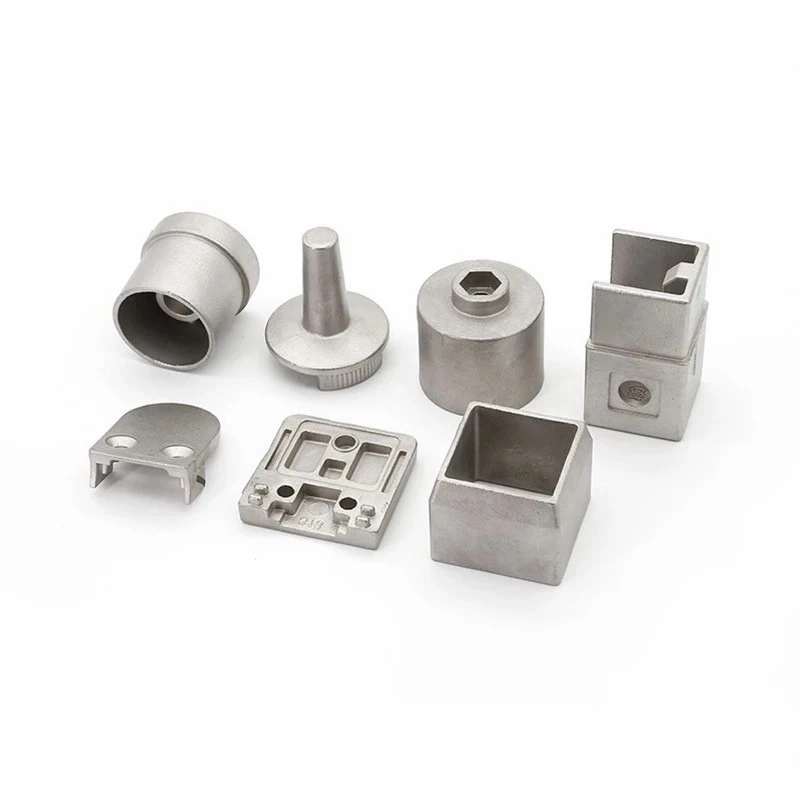
Designing an effective electronic enclosure involves complex engineering requirements—ranging from high mounting accuracy and thermal management to robust environmental sealing.
Deep Drawing Ideal for producing seamless metal housings with high depth-to-diameter ratios, integrated structures, and uniform wall thickness.
Key Advantages:
Seamless design that eliminates weld lines and leak paths
Superior structural integrity under high pressure or stress
Excellent surface uniformity and repeatable dimensions
Protection Standards & Environmental
IP Protection Ratings
Fully sealed designs compliant with IP65, IP67, and IP68 for dust-tight and submersible protection.
NEMA Standards
Built to meet NEMA 4, 4X, and 12 specifications for weather resistance and corrosive environment protection.
Material Options for Diverse Applications
Stainless Steel (304 / 316) Primary Advantages
Exceptional corrosion and chemical resistance; durable Common Applications: Outdoor power units, marine electronics, food processing, medical systems
Aluminum Alloys (5052 / 6061) Primary Advantages
Lightweight with high thermal conductivity; excellent strength-to-weight ratio Common Applications: Electronic Control Units (ECUs), battery systems, telecom modules
Carbon Steel Primary Advantages
High mechanical strength; highly economical for heavy-duty applications Common Applications: Industrial automation cabinets, power distribution boxes, heavy machinery controls
Surface Treatment & Finishing
Powder Coating
Provides a durable, scratch-resistant finish available in custom RAL colors and UV-stabilized formulations.
Anodizing (Clear / Color / Hardcoat)
Increases corrosion resistance and surface hardness while preserving thermal conductivity (optimized for aluminum).
Brushing & Polishing
Delivers a smooth, uniform surface finish for exposed stainless steel enclosures.Delivers a smooth, uniform surface finish for exposed stainless steel enclosures.
Plating & Conversion Coatings
Includes Zinc plating, Chromate conversion, and Electroless Nickel for enhanced EMI shielding or grounding requirements.
Quality Control & Compliance
Raw Material Verification
Material composition testing via spectrometer.
Dimensional Inspection
High-precision CMM, optical profiling, and dedicated checking fixtures.
Environmental Testing
Salt spray testing, coating thickness checks, and IP seal verification.
Fit-Check Integration
Pre-shipment assembly verification using customer-supplied PCB mockups or 3D models.
OEM / ODM Customization Workflow
DFM & Technical Review
We evaluate 2D/3D drawings and environmental specs to optimize Design for Manufacturability (DFM).
Prototype Development
Rapid samples are produced to validate fit, form, tolerances, and functional performance.
Mass Production
Scaled tooling and automated production ensure reliable, repeatable output.
Quality Inspection & Packaging:
Final inspection ensures full compliance before protective packaging and worldwide delivery.
We are one of the most experienced electrical & electronic housings manufacturers and suppliers in China. With a professional production team, we are able to meet the needs of the majority of our customers. Please rest assured to buy customized electrical & electronic housings made in China here from our factory. Also, OEM service is available.
